Review: I Believe in What's Possible Yet Design
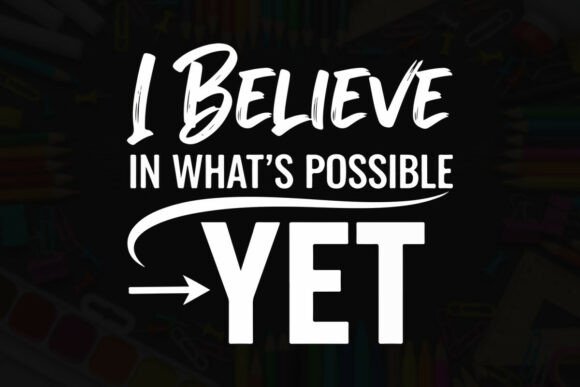
As an embroidery designer who has spent countless hours digitizing, testing, and stitching thousands of patterns, I approach every new machine embroidery design with a critical eye. It is not just about whether the image looks pretty on a screen; it is about how it translates to thread, how it behaves on fabric, and ultimately, how it serves the maker selling the finished product. Recently, I evaluated I Believe in What s Possible Yet, a graphic centered on celebrating educators. This piece is marketed under T-Shirt Designs and Graphics, but its potential extends far beyond a standard tee. Here is my practical assessment of how this design performs in real-world applications.
First Impressions and Visual Personality
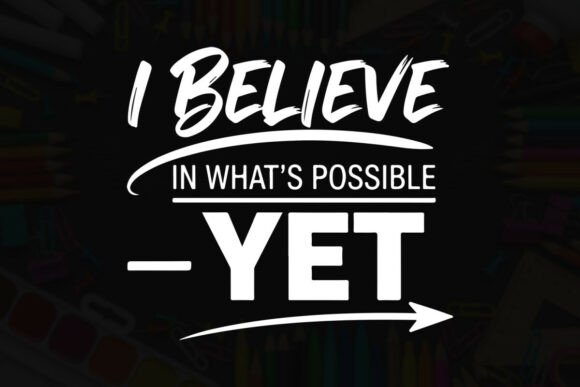
The immediate mood of I Believe in What s Possible Yet is one of quiet strength and inspiration. The layout balances bold typography with heartfelt sentiment, creating a visual personality that feels both professional and warm. For those of us in the craft community, finding designs that honor teachers without falling into cliché clip-art traps is a constant challenge. This artwork succeeds by focusing on the core message: the impact of guiding future minds.
From a technical standpoint, the line work appears clean. When I zoomed in to inspect the potential stitch paths, the transitions between elements suggested a thoughtful approach to stitch density. It does not look overly congested, which is a common pitfall in text-heavy graphics. The design invites you to imagine it not just as ink on paper, but as texture on cloth. It feels like a piece that belongs on items meant to be worn with pride or displayed in spaces dedicated to learning and growth.
Real-World Application Scenarios
To truly judge a design, you must visualize it in situ. I imagined preparing a custom order for a local school’s appreciation week. While the product description highlights its use as a Teacher T-shirt design, I found myself leaning toward more substantial fabrics. Imagine this stitched onto a high-quality canvas tote bag design. The durability of the bag pairs well with the enduring message of the quote. The contrast of bright thread colors against natural canvas would make the text pop, creating a functional handmade product that a teacher could use daily for books and supplies.
Another strong candidate is sweatshirt embroidery. A crewneck sweatshirt provides a stable, flat surface that allows the details of the lettering to shine without distortion. In this context, the design acts as a badge of honor. It transforms a basic garment into a personalized gift that carries emotional weight. I also considered its use on a structured apron for art teachers or science instructors who spend their days getting messy while inspiring students. Here, the design becomes part of their professional uniform, blending utility with identity.
For Etsy sellers and small shop owners, versatility is key. This design could easily anchor a line of holiday embroidery gifts for end-of-year presents. It fits seamlessly into categories like custom apparel, nursery decor for teacher-themed classrooms, or even as a central motif on a decorative pillow cover in a staff lounge. The emotional resonance of the phrase ensures high buyer engagement, as customers are often looking for gifts that say more than just "thank you."
Technical Considerations and Stitching Clarity
While the aesthetic appeal is strong, practical execution requires attention to detail. Text-based designs live or die by their readability. If you are planning to scale I Believe in What s Possible Yet down for a smaller item, such as a cap or a pocket patch, you must be cautious. Tiny lettering can easily become illegible if the stitch density is too high or if the thread thickness overwhelms the character shapes. I recommend running a test stitch on scrap fabric at your intended size before committing to the final piece.
Fabric choice plays a massive role here. On textured fabrics like terry cloth or heavy wool, fine details can get lost. For these materials, consider using a applique design technique if the file supports it, or opt for a heavier weight thread to ensure visibility. Conversely, on thin or stretchy fabrics, proper stabilization is non-negotiable. Without a cut-away stabilizer, the tension from the stitching could pucker the fabric, distorting the message and ruining the professional look of your embroidery project.
Dark fabrics present another challenge. If you are stitching on navy or black, you need high-contrast thread colors. However, be mindful of the background fill. If the design includes large solid areas, a dense fill stitch might create a stiff patch on a soft garment. Check if the design uses satin stitch borders effectively to define edges without adding unnecessary bulk. A well-digitized file will balance running stitch underlays with top stitches to ensure the design lays flat and remains flexible.
Enhancing Brand Value and Customer Trust
For creative entrepreneurs, the quality of your design assets directly reflects your brand consistency. Using a crisp, well-tested embroidery file builds customer trust. When a buyer receives a custom apparel item where the stitching is clean, the threads are secure, and the message is clear, they perceive higher value. This leads to better reviews and repeat business. I Believe in What s Possible Yet offers that potential for professionalism, provided it is executed with care.
Moreover, the thematic relevance of the design aids in marketing. It is not just a random graphic; it speaks to a specific audience. This specificity helps in creating targeted printable mockup previews for your online store. Showing the design on a realistic teacher’s tote or a cozy cardigan helps buyers visualize the finished product in their own lives, increasing the likelihood of conversion.
Practical Notes for Makers and Designers
Before you load this digital embroidery file into your machine, take these practical steps:
- Test on Scrap Fabric: Always stitch out a sample on the same type of fabric you intend to use for the final product. This reveals any tension issues or thread breaks.
- Check Thread Contrast: Ensure your thread colors stand out against the fabric. Use a color wheel tool if necessary to find complementary shades that enhance readability.
- Verify Hoop Size: Confirm that the design fits within your available hoop size without needing excessive re-hooping, which can lead to alignment errors.
- Inspect Small Details: Zoom in on the digital preview. Look for any tiny elements that might not stitch out cleanly and decide if they need simplification.
- Confirm Licensing: If you plan to sell items featuring this design, verify the license terms. Ensure it covers commercial embroidery use to protect your craft business from legal issues.
- Mockup in Black and White: Convert your preview to grayscale to check for value contrast. If the design disappears in black and white, it may lack definition in certain lighting conditions.
In conclusion, I Believe in What s Possible Yet is a compelling addition to your library of T-Shirt Designs and Graphics. It offers emotional depth and visual clarity, making it suitable for a wide range of embroidered patch projects, baby embroidery items for teacher’s kids, and boutique merchandise. By respecting the technical requirements of stitch density, fabric texture, and stabilization, you can transform this digital file into a tangible object that honors the passion and dedication of educators. It is a design that rewards careful execution with a high-quality, meaningful result.