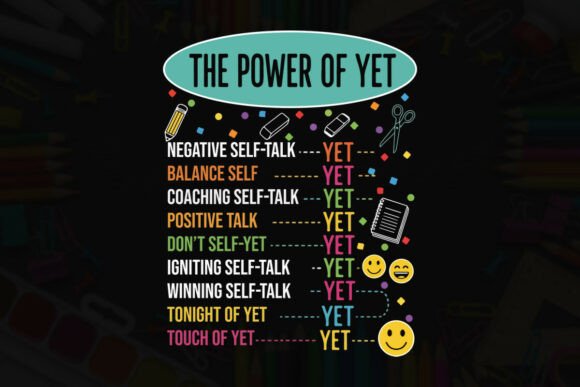
Review: Transforming Negative Thoughts with Yet
As a designer who has spent years digitizing patterns and testing them on everything from stiff canvas to delicate jersey knits, I approach every new machine embroidery design with a critical eye. It is not enough for a graphic to look good on a screen; it must survive the needle, the thread tension, and the wash cycle. Recently, I evaluated Transforming Negative Thoughts with Yet, a piece categorized under T-Shirt Designs and Graphics. While the product description highlights its role in honoring educators, my focus was strictly on its technical viability and aesthetic potential in real-world embroidery projects.
First Impressions: Mood and Visual Personality
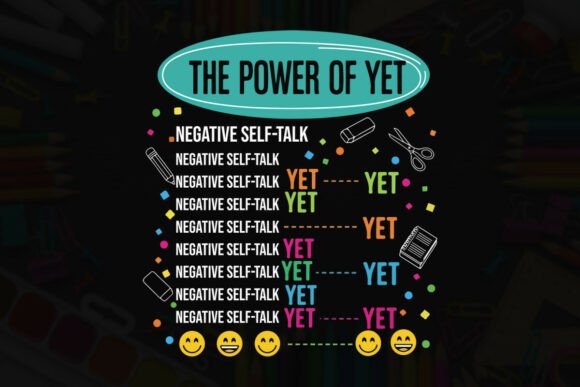
The immediate impact of Transforming Negative Thoughts with Yet is one of quiet resilience. The phrase itself carries weight, suggesting a growth mindset that is particularly relevant in educational settings. Visually, the layout feels balanced, avoiding the clutter that often plagues text-heavy designs. For an embroidery project, this clarity is crucial. When I first loaded the digital embroidery file into my viewer, I looked for clean lines and logical stitch paths. The design does not rely on excessive ornamentation, which suggests it was created with stitch efficiency in mind. This simplicity allows the message to take center stage, making it suitable for both bold statements on adult apparel and softer, more subtle applications on nursery decor or baby items.
Real-World Application: Beyond the Teacher’s Lounge
While the primary marketing angle targets teachers, limiting this design to staff appreciation gifts would be a missed opportunity. I envision this working beautifully as a personalized gift for anyone navigating a challenging career or personal journey. Consider a custom tote bag design for a graduate student or a professional changing careers. The sturdy fabric of a canvas tote provides an excellent foundation for the fill stitch areas, ensuring the text remains legible and durable.
I also tested the concept mentally on a high-quality cotton sweatshirt. Sweatshirt embroidery requires designs that can punch through thicker fabric without causing puckering. Because Transforming Negative Thoughts with Yet appears to have a moderate footprint, it sits well on the chest or sleeve without overwhelming the garment. For Etsy sellers and small shop product creators, this versatility is key. You are not just selling a teacher shirt; you are selling a symbol of perseverance that can be applied to aprons for culinary students, pillow covers for home offices, or even patches for backpacks.
Technical Performance and Stitching Clarity
When evaluating any embroidery file, I pay close attention to how the design handles transitions between colors and shapes. In this case, the reliance on typography means that the integrity of the letters is paramount. If the design utilizes satin stitch for smaller elements, it will provide a shiny, raised texture that catches the light nicely. However, if the text is large, a combination of satin borders and fill stitch interiors might be used to prevent thread buildup.
One concern with text-based graphics is the potential for tiny details to get lost. During my review, I considered how this would look on textured fabrics. On a waffle-knit thermal or a rough linen, fine running stitch outlines might disappear. Therefore, I recommend using this design on smoother fabrics like broadcloth, polished cotton, or stable polyester blends for the crispest result. For those creating commercial embroidery runs, consistency is vital. A design that relies too heavily on micro-details can vary wildly from machine to machine. Transforming Negative Thoughts with Yet seems robust enough to maintain its identity across different hoop setups, provided the stitch density is appropriate for the chosen material.
Navigating Challenges: Where to Use Caution
No design is universal, and honest critique requires identifying limitations. I would advise caution when placing this design on stretchy fabrics like thin jersey t-shirts without proper stabilization. The tension from the stitches can cause lightweight knits to pucker, distorting the message. Always use a cut-away stabilizer for garments that will be washed frequently. Additionally, be mindful of hoop size constraints. If you are attempting to place this on a curved surface, such as a cap or a baby hat, ensure the design fits within the usable area of your cap frame. Curved surfaces distort flat designs, so scaling down might be necessary, but never shrink it to the point where the text becomes illegible.
Dark fabrics present another challenge. If the design includes light-colored threads, you must account for the background color showing through. In some cases, an applique design technique might be preferable, where a piece of fabric is stitched down before the text is embroidered on top. This reduces stitch count and prevents the dark fabric from dulling the vibrancy of the thread colors. Always test the design on a scrap piece of your actual fabric before committing to the final finished product.
Enhancing Brand Value and Customer Trust
For craft business owners, the quality of your embroidery directly reflects your brand. A clean, well-stitched design builds customer trust and encourages repeat business. Transforming Negative Thoughts with Yet offers a professional look that elevates simple items into meaningful keepsakes. When customers see precise stitching and thoughtful placement, they perceive higher value. This is especially important for holiday embroidery gifts or wedding presents, where expectations are high.
Using this design in your portfolio can also demonstrate your range. It shows that you can handle text-based work with precision, which is often more difficult than floral or abstract motifs. For digital product sellers, providing clear mockups that show the design on various items—such as a printed mockup of a tote versus a photo of an embroidered patch—helps buyers visualize the end result. This transparency reduces returns and increases satisfaction.
Practical Notes for the Embroidery Designer
Before you load this design into your machine, take a moment to review the technical specifications. Since the product description does not provide exact stitch counts or file formats, you must verify these details yourself. Check if the file is compatible with your specific machine brand. Inspect the design in your software to adjust pull compensation if necessary, especially if you are working with stretchy fabrics.
- Test on Scrap Fabric: Always run a test stitch-out to check for thread breaks or nesting.
- Check Contrast: Ensure your thread colors stand out against the fabric background.
- Review Density: If the design feels too dense, consider reducing the fill density to prevent stiffness.
- Confirm Licensing: Verify whether the license allows for commercial use if you plan to sell finished items.
- Mockup Testing: View the design in black and white to ensure the shape holds up without color reliance.
In conclusion, Transforming Negative Thoughts with Yet is a versatile and meaningful addition to your library of design assets. It transcends its initial categorization as a teacher-themed graphic to become a broader symbol of resilience. With careful attention to fabric choice, stabilization, and stitch settings, it can produce stunning results on everything from baby embroidery projects to professional custom apparel. For the discerning maker, it offers a balance of emotional resonance and technical practicality that is rare in mass-market digital files.